

The Marzocco, the symbol
The Marzocco is the symbol of the Florentine Repubblic
Do you know why the Florentine Republic identify with a lion?
The name "Marzocco" carries the connotation of "Little Mars." Its origin traces back to the ancient Roman roots of Florence, established in the year 59 B.C. According to tradition, in the location of the Baptistery at Piazza S. Giovanni, there once stood a temple consecrated to Mars. Within its precincts, a statue of the deity was preserved. Eventually, this statue found a new home on Ponte Vecchio, where it stood guard over the city. Sadly, during the devastating flood of 1333, the statue was swept away. Interestingly, historical records cast doubt on the existence of this temple, for beneath the floor of the Baptistery, remnants of a Roman dwelling have been unearthed. An intricate mosaic decoration attested to the opulence of this Roman abode.
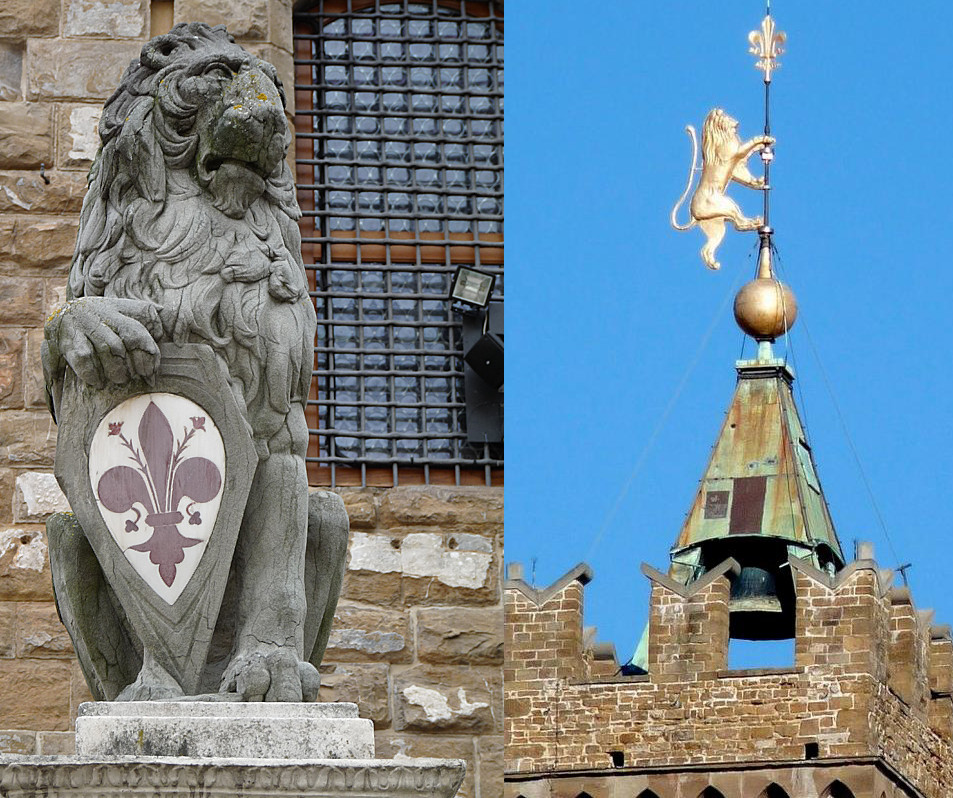
The most renowned depiction of the Marzocco was crafted by Donatello in the year 1418. Today, this masterpiece resides within the hallowed halls of the National Bargello Museum. However, a faithful replica graces the expanse of Piazza Signoria. In this representation, a noble lion extends its paw atop the emblem of Florence: a red lily embellishing a pristine white background.
In the heart of the 14th century, behind Piazza Signoria, a cage housing a collection of lions served as a protective enclosure for the city's priors, the esteemed representatives of the Florentine government.
Notably, the bronze rendition of this majestic beast also adorns the summit of the Priors' Palace Tower, erected by the skilled hands of Arnolfo di Cambio in the year 1310. As the Florentine adage goes, "Se il lione piscia in Arno è acqua," signifying that if the wind carries the lion's gaze towards the Arno River, and it relieves itself therein, rain shall soon follow!
Altri articoli

Gambassi Terme
Prominence on Via Francigena.
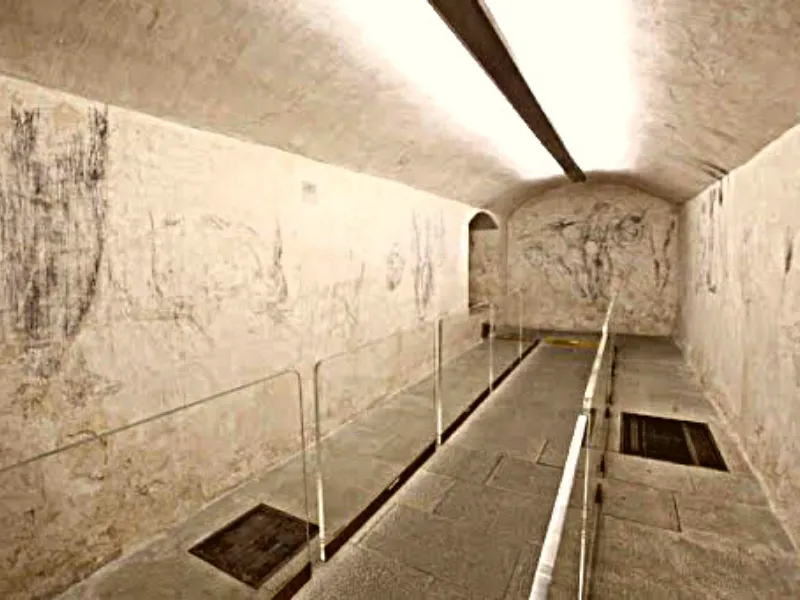
Michelangelo and the secret room.
The artist drew even his self-portrait depicting the attitude of an imprisoned man.

The Tuscan Cigar
The Tuscan cigar, born from a mishap in 1815, became an iconic product in Florence. Its affordable price and unique taste made it popular.
A XVII century giant in a secret garden
The monster imprisoned Ulysses and his friends in a grotto to eat them.